

When you are in charge of keeping large fleets fueled up with cost-effective and timely diesel delivery, optimizing logistics is essential. Choosing between on-site fuel delivery vs. traditional gas stations in Texas is more than a matter of convenience. Your decision will impact everything from fuel costs to operational efficiency.
Learn more about the two options so you can identify which approach is best for your job site.
On-Site Fuel Delivery vs. Traditional Gas Stations in Texas: Why the Choice Matters
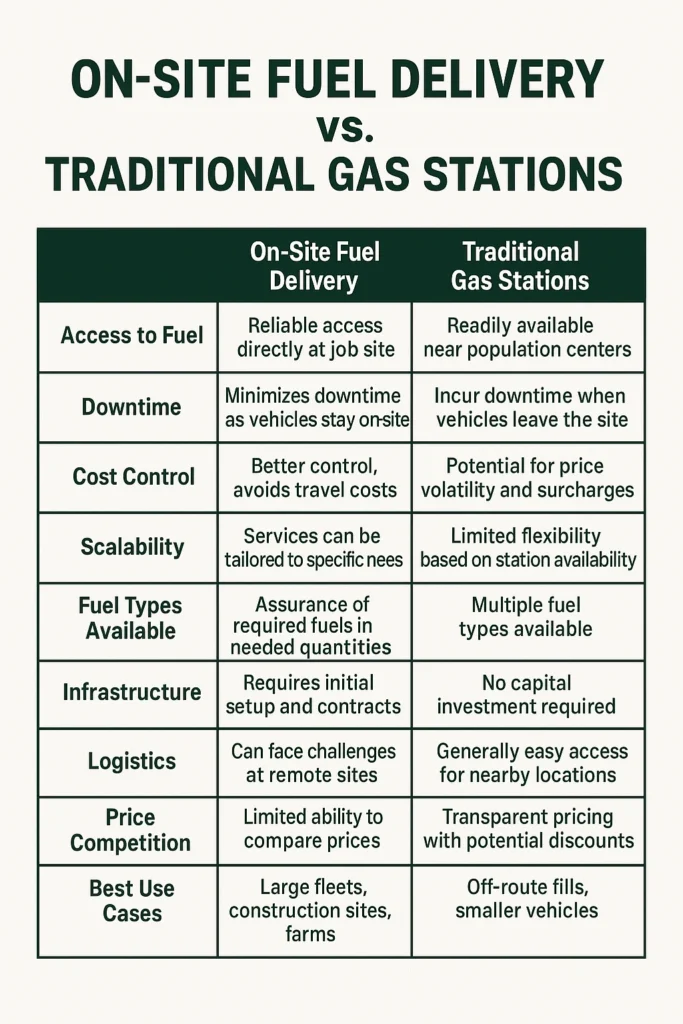
A lot is riding on your choice between on-site fuel delivery vs. traditional gas stations in Texas. Here’s what’s at stake:
Reliable access to fuel types
Minimized downtime
Cost control
Scalability and flexibility
Construction sites, large fleet operations, and farming businesses need reliable access to diesel, gasoline, diesel exhaust fluid (DEF), and alternative fuels to power their heavy equipment.
The decision between on-site fuel delivery vs. traditional gas stations in Texas is especially important if your fleet vehicles operate off the beaten path. Going to fueling stations means losing valuable time, which can erase any cost savings.
On the other hand, a mobile fueling service can simplify fleet management and reduce labor costs, as your staff can stay on-site and focus on productivity.
Pros and Cons of Traditional Gas Stations
Relying on a traditional gas station to fuel your work sites offers some benefits and drawbacks. The advantages include the following:
Established Infrastructure: Gas stations are everywhere, meaning it’s easy to pull in and fill up if you operate near population centers
Multiple Fuel Types: You can access several types of quality fuel, including diesel, gasoline, and DEF
Pricing Transparency: Stations advertise posted fuel prices, and you may even be able to negotiate a fleet discount
No Capital Equipment Required: You don’t need to own or maintain fuel tanks, pumps, delivery vehicles, or dispensing systems
Retail gas stations can meet your fuel needs if they are located in close proximity to your work site. However, you need to be mindful of these drawbacks:
Downtime: Every time a vehicle or piece of heavy machinery leaves the site, you lose time and productivity
Distance and Access Issues: If your job site is far from established roads, reaching a fueling station may be impractical
Fuel Price Volatility: Stations sometimes add surcharges or premium pricing during periods of high demand
Limited Control: You have to plan refueling around the station’s operating hours and capacity to handle your specific needs
You’ll need to make your decision based on the location of your site, as well as your fuel usage trends. Frequently leaving the site to refuel at a faraway station can lead to increased labor costs and lots of wasted time.
Pros and Cons of On-Site Fuel Delivery
Mobile fuel delivery services or on-site fuel services bring fuel directly to your job site. In Texas, leading providers may also offer delivery trucks for fuel, generator refueling, and bulk storage tank solutions. The advantages include the following:
Time Savings: Vehicles never have to leave the site just to refuel
Better Cost Control: You avoid travel costs and potential markups at stations
Scalable: On-site fueling services can be adapted to suit your unique needs
Comprehensive Service: Many providers offer tanks, tracking, reporting, and more
Assured Fuel Types: A delivery provider can ensure you have access to the right fuels in the right quantities
There are trade-offs, such as:
Upfront Contract Costs: There may be minimum volume commitments, delivery fees, or service contracts required
Logistics Challenges: Delivering to hard-to-reach construction sites or farming operations can result in added costs
Less Price Competition: Since fuel is customized and delivered, you won’t be able to compare real-time pricing across multiple suppliers
Dependency on a Single Provider: If your provider experiences delays, it could disrupt your operations
For most fleet operations, the benefits of on-site bulk delivery outweigh the drawbacks.
Key Considerations for Fleet Managers
When deciding between on-site fuel delivery vs. traditional gas stations in Texas, you should consider the following:
Your proximity to fueling stations
The size of your fleet
Fuel consumption trends
Scheduling flexibility
The fuel types you need
Operational overhead
In Texas, many construction companies, farms, and municipalities operate in zones where convenience stores are sparse. In those scenarios, on-site delivery can be a game-changer.
When Both Options Make Sense
Sometimes, relying on mobile refueling and convenience stores is the right fit. For example, you can use traditional gas stations for casual or off-route fills. You can also turn to your local convenience store to fill up smaller vehicles or as an emergency option when your provider gets delayed.
On the other hand, fuel delivery is the best choice when you need large quantities of fuel on-site. You can skip the hassle of moving machinery off-site and, instead, spend more time being productive.
How to Evaluate On-Site Fuel Delivery Proposals
If you’re considering a delivery provider alongside station-based options, here’s what to look for:
Transparent cost breakdowns
Minimum volumes and contract terms
Safety, compliance, and permits
Fuel quality and types available
Tracking, reporting, and auditability
Redundancy and backup plans
While the upfront cost of hiring a fuel truck to come to your site will be higher compared to heading to the gas station, you have to consider other variables and how they impact your bottom line.
For example, you can save time and labor costs associated with leaving the job to refuel. Those expenses can add up quickly if your employees have to drive 30 minutes or more to reach a convenience store.
Partner With FHG Fueling to Meet Your Fueling Needs
There’s no one-size-fits-all answer when comparing on-site fuel delivery vs. traditional gas stations in Texas. For many fleet managers, construction operations, farms, and businesses with generator needs, the gains in productivity and control make the on-site approach a better choice.
However, traditional fueling stations still have a role. If you want to learn more about on-site fuel operations and whether they are right for you, contact FHG Fueling to schedule a consultation.